You’re sitting at home on a quiet evening when suddenly your boiler roars to life, making a loud boiler making noise like an aeroplane sound—almost as if it’s preparing for take-off. It’s loud, unsettling, and honestly a little scary.
If that’s happening in your home, you’re not alone. Noisy boilers are a common problem for households, especially during winter when heating systems are under pressure. But what causes this strange “aeroplane” sound, and more importantly, is it dangerous?
Let’s break down what’s really happening inside your boiler, what’s safe, what’s not, and how to fix or prevent it safely.
Is a Noisy Boiler Dangerous?
Not all boiler noises are dangerous, but some can be early warning signs of deeper issues. A healthy boiler should operate quietly, producing only a soft hum when running.
If you hear whistling, banging, gurgling, or a roaring sound like a jet engine, it means something inside the system isn’t working as it should.
Here’s a quick overview:
Low humming
Meaning: Normal vibration
Danger Level: Safe
Gurgling
Meaning: Air trapped in system
Danger Level: Low
Whistling or boiling sound
Meaning: “Kettling” – overheating water
Danger Level: Medium to High
Loud banging
Meaning: Pressure or pump fault
Danger Level: High
Roaring / Jet noise
Meaning: Fan or flue issue
Danger Level: High
Clicking / Buzzing
Meaning: Electrical fault
Danger Level: High
If the noise is constant, accompanied by leaks, burning smells, or flashing error codes, turn the boiler off and contact a Gas Safe registered engineer immediately.
Why Does Your Boiler Sound Like an Aeroplane?
That airplane-like roar isn’t random, it’s the result of air, water pressure, or mechanical faults inside the system.
Here are the most common reasons:
1. Kettling (Boiling Water Inside the Boiler)
When limescale builds up on the heat exchanger, it restricts water flow. The trapped water boils unevenly, producing steam bubbles that collapse with force, like a kettle boiling, but louder.
Typical symptoms:
- Rumbling or “boiling” sound
- Radiators slow to heat
- Boiler switches off suddenly
- Rumbling or “boiling” sound
Why it matters:
Continuous kettling can overheat your boiler, damage internal parts, and shorten its lifespan.
Fix:
Only a professional should descale the heat exchanger or perform a chemical flush.
Tip: If you live in a hard-water area, fit a magnetic or scale filter to reduce limescale buildup.
2. Trapped Air in Radiators or Pipes
When air becomes trapped in the heating system, it prevents water from circulating smoothly.
You’ll hear bubbling or gurgling, often louder in upstairs radiators.
DIY Fix:
- Turn off the heating.
- Use a radiator key to bleed the trapped air.
- Check system pressure afterward (1.0–1.5 bar is ideal).
If the noise returns, your system may have a leak or expansion vessel issue.
3. Pump or Bearing Problems
Your boiler’s circulation pump keeps hot water moving through the pipes.
When the bearings inside wear out, you’ll hear deep humming or vibrating, similar to a distant engine.
Why it happens:
Overuse, age, or debris buildup can strain the pump.
Fix:
Worn bearings may need lubrication, but often the pump requires replacement.
Ignoring it can cause overheating or reduced water pressure.
4. Loose Pipes or Mountings
Sometimes, the problem isn’t the boiler at all — it’s the pipework.
Loose or unsecured pipes can rattle against walls or floors as water rushes through, creating loud knocks or vibrations.
Fix:
Secure the pipes using clips or foam insulation.
Avoid tightening them too hard; metal expands slightly when heated.
Tip: If the noise only occurs when heating turns on or off, pipe expansion is the likely cause, not a boiler fault.
5. Fan or Flue Fault
If your boiler’s fan or flue is damaged or misaligned, it may create a roaring or whooshing sound, exactly like a jet engine.
Why it’s serious:
The fan ensures gases are safely expelled from your home.
A malfunction here can cause dangerous carbon monoxide leaks.
Fix:
If your boiler is making noise like an aeroplane, stop using the boiler immediately and call a Gas Safe engineer right away.
6. Pressure Imbalance
Boilers operate best at a stable pressure (usually 1–1.5 bar).
If pressure rises too high or drops too low, you’ll hear loud bangs or knocking as water flow struggles through the pipes.
Check the gauge:
- If too low, top it up using the filling loop.
- If too high, bleed radiators or contact an engineer.
Don’t overfill — too much pressure can trigger safety valves and leaks.
7. Limescale and Sludge Buildup
Hard water minerals and rust form sludge that clogs pipes and heat exchangers.
You might notice:
- Rumbling or popping noises
- Uneven radiator heating
- Yellow or dirty water when bleeding radiators
Fix:
A power flush removes sludge and restores quiet operation.
Boiler Noise Types, Causes, and Solutions
Whistling / Hissing
Likely Cause: Kettling or trapped air
DIY Action: Bleed radiators
Professional Fix: Chemical or power flush
Banging / Knocking
Likely Cause: Pressure surge or pump fault
DIY Action: Check gauge
Professional Fix: Pump repair or pressure valve fix
Vibrating / Humming
Likely Cause: Loose pipes or worn bearings
DIY Action: Secure pipes
Professional Fix: Replace pump or fan
Gurgling / Bubbling
Likely Cause: Air pockets in pipes
DIY Action: Bleed system
Professional Fix: Expansion vessel service
Whooshing / Jet noise
Likely Cause: Fan or flue problem
DIY Action: Do not attempt
Professional Fix: Fan replacement, safety inspection
What to Do Immediately
If your boiler is noisy but still heating water, here’s how to respond safely:
- Turn off the heating and let the boiler cool for 15–20 minutes.
- Check the pressure gauge.
- Too low (<1 bar): Repressurize.
- Too high (>2 bar): Bleed radiators.
- Too low (<1 bar): Repressurize.
- Bleed radiators to remove trapped air.
- Inspect visible pipes and valves for leaks.
- Listen carefully — note if the sound appears only when heating starts or when hot water runs.
- Check the condensate pipe — freezing or blockage can create back pressure and noise.
- Restart the boiler and monitor.
Safety Reminder: Even if the boiler still provides heat and hot water, unusual sounds mean it’s under strain — fixing it early saves money and prevents major damage.
When Boiler Noise Becomes Dangerous
Some sounds mean your system is reaching a critical failure point.
Here’s how to recognise the red flags:
Continuous roaring
Risk: Faulty fan or burner
Action: Turn off boiler and call engineer
Sharp metallic banging
Risk: High pressure or pump failure
Action: Shut down immediately
Hissing + overheating
Risk: Kettling (steam buildup)
Action: Emergency service required
Buzzing / clicking
Risk: Electrical component fault
Action: Switch off power supply
Rattling + leaking water
Risk: Broken seal / valve
Action: Shut off water supply
Do not remove the boiler cover or tamper with internal parts, it voids warranty and risks gas leaks.
DIY vs Professional Repair
Some boiler noises are minor and fixable with simple maintenance, but others require trained expertise.
Bleeding radiators
DIY possible: Yes
When to call engineer: If noise returns within days
Low pressure
DIY possible: Repressurise safely
When to call engineer: If pressure drops repeatedly
Loose pipe rattle
DIY possible: Clip & insulate
When to call engineer: If sound comes from boiler casing
Limescale / kettling
DIY possible: Requires specialist tools
When to call engineer: Power flush or descaling needed
Fan / flue noise
DIY possible: Dangerous
When to call engineer: Gas Safe repair only
Constant jet roar
DIY possible: Not safe for DIY
When to call engineer: Emergency engineer required
Engineers are typically trained to work with a variety of boiler systems, including well-known models like Worcester Bosch, Vaillant, Ideal, Baxi, and Glow-worm. This broad knowledge helps them diagnose and fix issues across different brands effectively.
How Much Does It Cost to Fix a Noisy Boiler?
Price varies depending on the issue, but here’s a realistic guide for homeowners:
Radiator bleeding / system balance: £60–£90
Repressurisation + minor tune-up: £80–£120
Replacing pump bearings: £120–£180
Chemical flush: £150–£220
Power flush (full system): £200–£300
Fan or flue replacement: £250–£350
Full boiler replacement: £1,800–£2,500
Investing in an annual boiler service (about £80–£100) can save you hundreds in emergency callouts.
Preventing Boiler Noise (Long-Term Care Tips)
- Service the boiler yearly.
Regular servicing detects limescale, leaks, and air issues before they escalate. - Install a magnetic filter.
It traps debris and extends boiler life. - Use corrosion inhibitor fluid.
Prevents sludge buildup and protects the heat exchanger. - Bleed radiators every few months.
Especially before winter. - Check system pressure monthly.
Keeping it balanced ensures smooth operation. - Avoid hard water damage.
Fit a water softener if you live in a hard-water area. - Don’t ignore small noises.
Early attention can save hundreds in repair bills.
A quiet boiler is a healthy boiler, small maintenance habits make a huge difference.
Final Thoughts
A boiler that sounds like an aeroplane isn’t just annoying, it’s a clear sign that something inside the system isn’t right.
Most of the time, the cause is harmless, but ignoring the sound can turn a small fix into a costly repair.
By understanding what each sound means and taking simple precautions, you can keep your heating system running quietly and efficiently for years.
If your boiler noise persists after basic checks, a quick visit from a qualified engineer can restore peace (and warmth) to your home.
Expert advice adapted from real heating engineers with over a decade of experience ensuring boiler safety and reliability.
Real Case Study: The “Jet Sound” Mystery
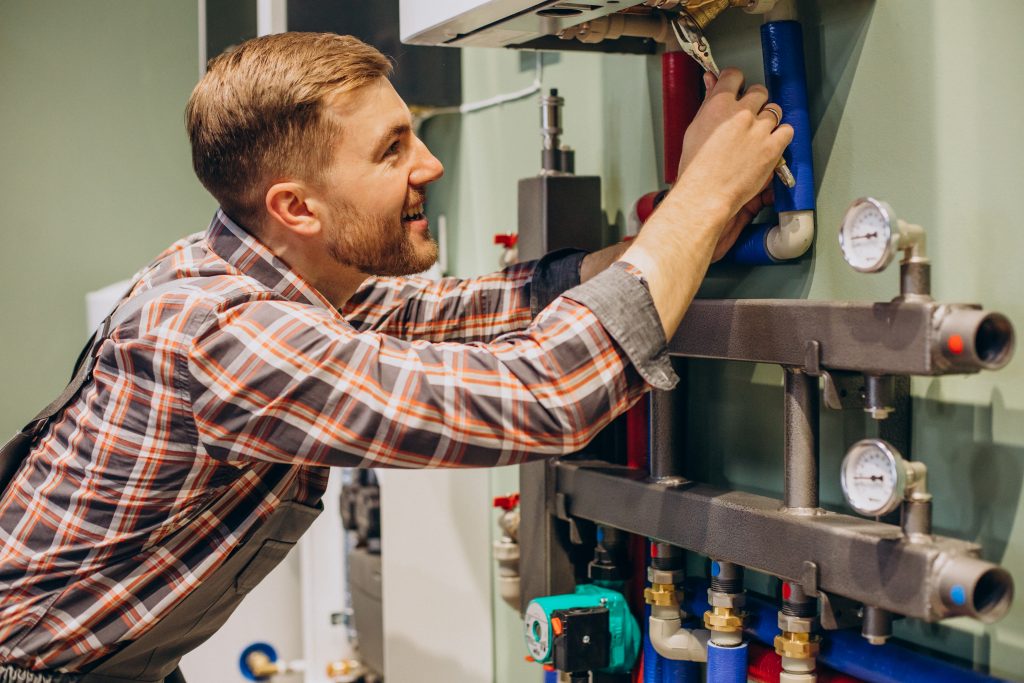
One of our EPG247 engineers recently visited a client in Cambridge whose combi boiler made a terrifying jet noise every time the heating switched on.
The homeowner feared the boiler was about to explode.
After inspection, our engineer found:
- Severe limescale inside the heat exchanger
- Pressure rising beyond 2.8 bar
- Faulty pump bearings amplifying vibration
Within 2 hours, after a chemical flush, pump replacement, and descaling, the boiler ran quietly again, no roar, no danger.
Moral: A noise might sound dramatic, but the fix is often straightforward when handled professionally.
Final Thoughts
A boiler that sounds like an aeroplane isn’t just annoying, it’s a clear sign that something inside the system isn’t right.
Most of the time, the cause is harmless, but ignoring the sound can turn a small fix into a costly repair.
By understanding what each sound means and taking simple precautions, you can keep your heating system running quietly and efficiently for years.
If you’re in the UK and your boiler noise persists after basic checks, a quick visit from a qualified engineer can restore peace (and warmth) to your home.
Expert advice adapted from real UK heating engineers with over a decade of experience ensuring boiler safety and reliability. time
FAQs
Why does my boiler sound like an aeroplane?
Because of trapped air, fan imbalance, or kettling, steam or air moving rapidly through the system creates that jet-like roar.
Is a noisy boiler dangerous?
Not always, but it can be. If the noise is continuous or accompanied by leaks, smells, or high pressure, turn it off and call an engineer.
My boiler makes noise but I have no hot water, why?
Your diverter valve or heat exchanger may be blocked. It’s best handled by a professional.
Boiler making noise when heating is on, normal?
Minor clicks are fine, but whistling, banging, or roaring sounds mean pressure or air problems.
Can I fix boiler noise myself?
You can bleed radiators and check pressure, but anything inside the boiler casing must be handled by a Gas Safe registered engineer.