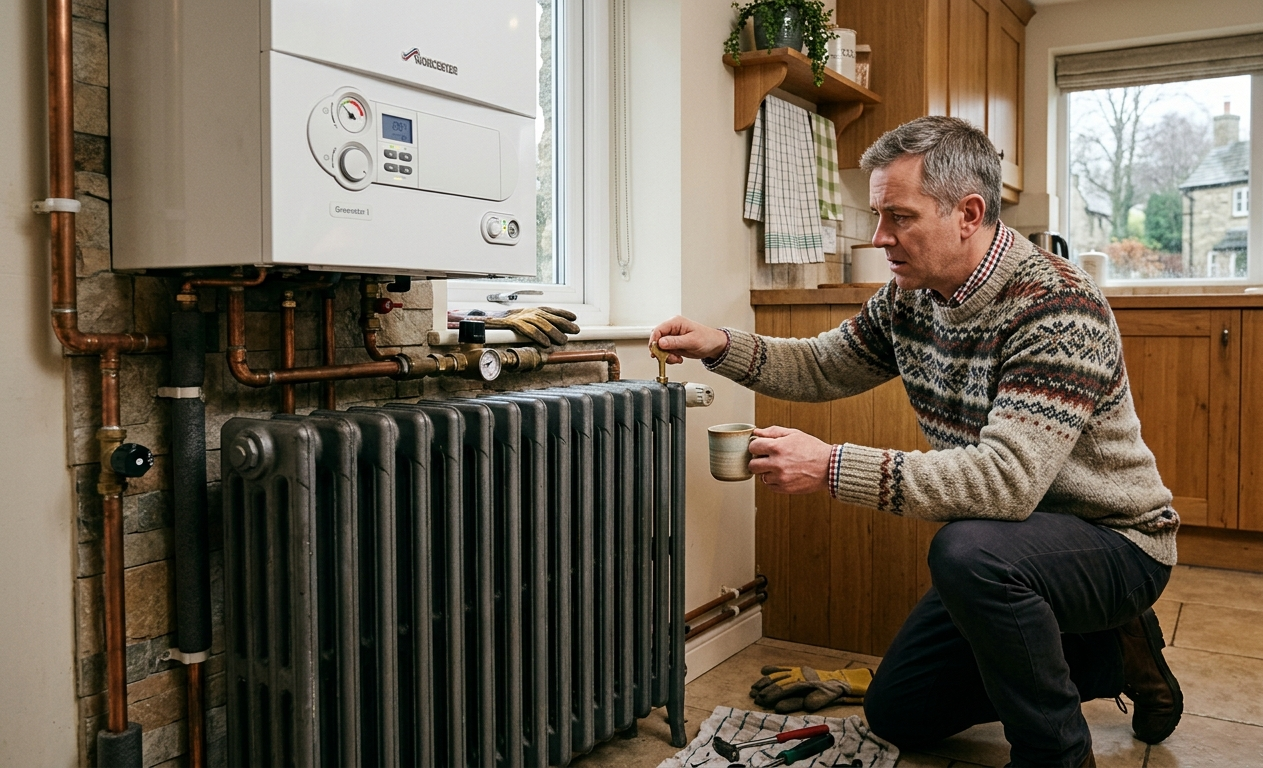
It is a scenario encountered hundreds of times from the leafy streets of Barnet to the busy residential areas of Luton: You hear the boiler fire up, the display panel says everything is “Normal,” and you might even have steaming hot water in your kitchen sink—but the radiators in your rooms are as cold as the pavement on a freezing winter night in North London.
When your boiler is “on” but the radiators aren’t heating up, it feels like a ghost is haunting your heating system. You’re paying for gas, the boiler is burning, but the heat just isn’t making the journey to your rooms. As we transition into the warmer months and turn our heating off, many homeowners realize their systems have been struggling all winter.
If you are facing this right now, don’t ignore it just because summer is coming. A boiler that runs without heating radiators is a system under immense stress, and fixing it during the off-season is the smartest move you can make for your wallet and your peace of mind.
🛠️ Stuck with a cold house in North London or Bedfordshire?
Don’t spend your evening staring at a boiler error code you don’t understand. Our emergency engineers are local to Enfield, Barnet, and Luton, providing a rapid response to get your heat back on track.
[Call EPG24/7 at: 0800 294 4365]
1: The Homeowner’s Diagnostic Checklist
Before calling out an engineer to your home in Tottenham or Haringey, there are several manual checks you can perform. Sometimes, the solution is a simple setting rather than a broken component.
Verify Thermostat Communication:
- Is the thermostat set at least 2-3 degrees higher than the current room temperature?
- Check the batteries—wireless thermostats often stop sending signals to the boiler when power is low.
- Ensure the “Target Temperature” hasn’t been accidentally lowered by a child or a guest.
Check the Boiler Control Mode:
- Modern boilers often have a “Summer/Winter” toggle.
- If your boiler is in “Summer Mode” (look for a sun icon), it will only provide hot water for your taps and showers, completely ignoring the heating circuit.
- Switch it to the “Radiator and Tap” icon to test the heating.
Inspect the Programmer/Timer:
- Digital timers can sometimes reset after a power flicker.
- Check if the clock is displaying the correct time. If the boiler thinks it’s 2 AM, it won’t fire for heating regardless of how cold the house feels.
2: Why the Heat Isn’t Moving (The Mechanical Culprits)
If your settings are correct but the radiators remain stone-cold, the issue is almost certainly mechanical. This is where professional expertise becomes essential. For homes in Bedford or Luton, we typically find one of the following internal failures:
1. The Diverter Valve: The “Traffic Warden” of Your Boiler
In a Combi boiler, the diverter valve is a small but critical component that opens and closes to direct hot water either to your hot water taps or your central heating radiators.
- How it fails: Over time, sludge and debris in the system can cause the valve to stick.
- The Symptom: You have perfectly hot water for your morning shower, but the heating refuses to kick in.
- The “Half-Way” Failure: Sometimes the valve gets stuck in the middle. You might notice your radiators getting slightly warm only when the hot water tap is running.
- The Professional Fix: Our engineers will open the boiler casing to inspect the valve actuator. Sometimes it can be cleaned, but often, a replacement is the only way to ensure reliability.
2. The Circulation Pump: The Heart of the System
Your boiler heats the water, but the pump is what actually pushes that water through the labyrinth of copper pipes in your North London property.
Common Pump Failure Signs:
- The “Scorching” Test: If the pump feels incredibly hot to the touch but the pipes leading away from it are cold, the internal impeller is likely seized.
- Strange Noises: A humming, vibrating, or grinding noise coming from the boiler area usually indicates a pump that is struggling to spin.
- Air Locks: Just like radiators, pumps can get air trapped inside them, which prevents them from moving water effectively.
Local Note:
In older properties across Hertfordshire and Bedfordshire, pumps have to work harder due to older pipework diameters, making them more prone to burnout.
3: The Danger of Sludge, Limescale, and “Kettling”
If you hear your boiler making a sound like a boiling tea kettle, do not ignore it. This is known as “kettling” and it indicates that water is being trapped inside the heat exchanger.
The Impact of Hard Water:
- Areas like St Albans and Watford have notoriously hard water. This leads to limescale build-up inside the boiler.
- Limescale acts as an insulator, meaning the boiler has to burn more gas to heat the same amount of water, eventually causing the metal to overheat and crack.
The “Black Mud” (Sludge):
- Corrosion inside your radiators creates magnetite (sludge).
- This sludge settles in the bottom of the boiler, blocking the flow of water.
- Result: The boiler fires up, realizes the water isn’t moving, and shuts down (Lockout) to prevent an explosion.
4: A Step-by-Step Troubleshooting Guide
Before you pick up the phone, go through this list. It allows us to provide a more accurate quote when you call our Essex or Cambridgeshire teams:
- Pressure Gauge: Is the needle between 1.0 and 2.0 bar? If it’s below 1.0, the boiler won’t have enough pressure to reach upstairs radiators.
- Error Codes: Is there a flashing light or a sequence like F22, F75, or E110? These codes tell us exactly which sensor is unhappy.
- Pipe Temperature: Carefully feel the two widest copper pipes directly underneath the boiler. If they are hot but the radiators are cold, the pump or diverter valve is to blame.
- Header Tank: If you have an older “Vented” system (usually found in Bedford), check the small tank in the loft. If it’s dry, your system can’t fill with water.
5. Why Pre-Winter Maintenance is a Smart Financial Move
As an experienced team serving North London, Essex, and Hertfordshire, we always advocate for “Spring and Summer Maintenance. “Here is why:
- Prevention of “Seized” Parts: “Many pumps and valves tend to fail during the first cold snap of the year because they’ve been sitting idle throughout the warmer months.
Running a professional health check during the off-season ensures these moving parts stay mobile and functional, preventing a total system shutdown when you need the heat the most.”
- Emergency call-out rates during the peak winter season are significantly higher due to the overwhelming surge in demand.
Fixing a minor diverter valve or pump issue during the quieter summer and spring periods is far more cost-effective. By being proactive, you avoid the premium rates and the long waiting lists that come with emergency repairs in the middle of a freeze.
- System Longevity: A boiler struggling against sludge or a failing pump uses up to 25% more gas. Cleaning the system now lowers your energy bills immediately.
- Safety: A boiler that isn’t circulating correctly can lead to cracked heat exchangers and, in rare cases, carbon monoxide risks.
Final Thoughts from the EPG24/7 Team
Your heating system is the most expensive appliance in your home. Don’t leave its health to chance. Whether you are in a townhouse in Barnet, a semi-detached in Luton, or a flat in Enfield, we have the local expertise to ensure your boiler is doing its job.
We provide specialized support across:
- North London: Barnet, Enfield, Tottenham, Harrow.
- Bedfordshire: Luton, Bedford, Dunstable.
- Hertfordshire: St Albans, Watford, Hemel Hempstead.
- Essex & Cambridgeshire surrounding districts.
Don’t wait for the first frost of winter. Get your system checked today.
Call us: 0800 294 4365
Frequently Ask Question
Why is my boiler working but the radiators are cold?
Common causes include a faulty diverter valve (if you have hot water but no heating), a seized circulation pump, or a broken thermostat. It could also be due to an internal boiler lockout caused by low pressure.
What does a diverter valve do in a boiler?
A diverter valve directs hot water to either your taps or your radiators. If it gets stuck, you might have steaming hot water for showers but your radiators will stay cold because the heat cannot leave the boiler.
How can I tell if my boiler pump is broken?
A working pump should vibrate slightly and feel warm. If it is silent but scorching hot, or making loud banging and grinding noises, the pump has likely failed and is not circulating water to your radiators.
What is boiler kettling?
Kettling is a whistling or banging sound caused by trapped water overheating inside the heat exchanger. This is often due to limescale or sludge blockages. It is a serious issue that requires immediate professional attention.
Why is my thermostat not turning on the heating?
Check for dead batteries or a lost connection between the thermostat and the boiler. Also, ensure the “target temperature” is set higher than the current room temperature, otherwise, the boiler will not fire for the heating circuit.