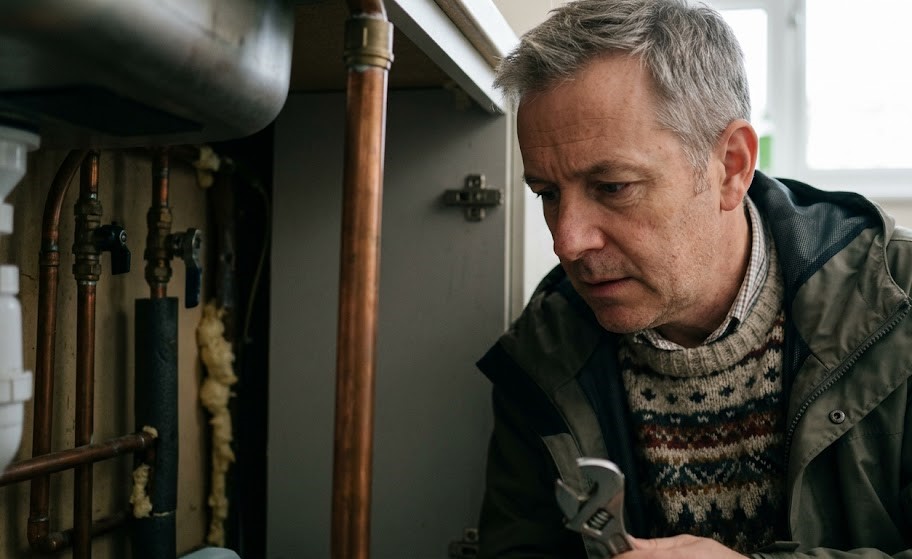
It is midnight, the entire house is silent, and you have just brushed your teeth before bed. You flip the bathroom tap shut, and suddenly a sharp, aggressive thud echoes from behind your plasterboard.
Dealing with pipes making noise when water is turned off is a deeply frustrating experience for any homeowner. Many people assume they have to live with it, but you can actually silence these noises yourself with the right practical steps.
This guide focuses purely on actionable solutions to fix your noisy pipework without any confusing technical talk. We will skip the long theories and jump straight into the exact home remedies that work.
 Is that sudden post-water thumping driving you crazy right now? Call our friendly local team at Emergency Plumbing Group 247 on 0800 294 4365 for a fast, fixed-price solution today!
Problem 1: Sudden Violent Thud Right After Closing a Tap
When you shut off a modern quarter-turn mixer tap, the water moving through your lines comes to an abrupt halt. This sudden stop sends a high-pressure shockwave backward through the sealed copper network.
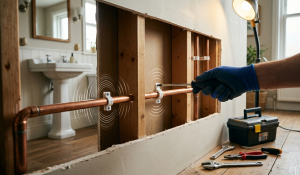
This pressure spike causes the unclipped metal tubes to bounce and strike the wooden frames inside your walls. The result is a single, heavy, metallic thud that sounds like someone hitting your wall with a hammer.
The Solution: Recharging Your Home’s Natural Air Cushions
The quickest and most reliable trick to stop sudden pressure thuds is to drain down your whole property. Your plumbing has built-in vertical pipe sections designed to hold air cushions that absorb sudden water shocks.
Over a few years of daily use, these empty pockets naturally fill up with water, removing your system’s shock absorbers. Recharging these air cushions takes less than an hour and does not cost a single penny.
You can successfully restore your system’s natural air buffers by following these exact steps:
- Shut the main supply: Locate your main stopcock valve under the kitchen sink and turn it fully clockwise to stop incoming water.
- Open all your taps: Go upstairs and open the highest tap fully, then move downstairs and open every single tap on the lower floors.
- Flush your toilets: Flush every toilet cistern in the house until the tanks are completely empty and clear of water.
- Let the system bleed: Leave all your taps wide open for ten minutes until every last drop drains out and air fills the empty lines.
- Reboot the system: Turn your main stopcock back on very slowly, let the water run smoothly, and then close each tap one by one.
Problem 2: High Incoming Water Speed Creating Continuous Shaking
Sometimes, the water entering your property from the street main line is travelling at an excessively high velocity. While this high pressure feels fantastic during a shower, it forces too much energy into your domestic plumbing lines.
Every time a tap or household valve closes, the aggressive velocity multiplies the strength of the shockwave. This creates a prolonged, violent shaking sound throughout the entire house right after any water is used.
The Solution: Adjusting the Main Stopcock and Installing a PRV
You can instantly fix a minor pressure issue by turning your main stopcock valve clockwise by just one quarter-turn. This small mechanical restriction limits the rush of incoming water without ruining your daily morning shower experience.
It lowers the velocity of the water, which immediately softens the impact force when a kitchen or bathroom tap snaps shut. However, if your street’s main water pressure is naturally extreme and consistently exceeds 4.5 bar, a manual twist is not enough.
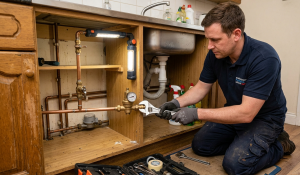
In this situation, you need a professional to install a dedicated Pressure Reducing Valve, often called a PRV. It is fitted right after your main indoor stopcock and automatically tames the incoming rush.
A PRV ensures your whole home enjoys a safe, consistent flow that will not damage your boiler or tap joints:
- Constant Regulation: It stabilizes the incoming water flow to a safe, consistent level.
- Full Protection: It protects your entire plumbing network from high-pressure spikes around the clock.
- Appliance Safety: This single installation saves your boiler, taps, and pipe joints from premature wear.
Problem 3: Rhythmic Ticking and Rattling Long After Water Stops
If your pipes continue to make a lighter, rhythmic clicking or rattling sound long after a tap is closed, the physical copper tubes are loose. When water stops moving or cools down, the metal lines naturally flex, expand, or contract.
Because the pipes lack solid physical support, they slide back and forth, hitting the nearest wooden joists. This creates an incredibly annoying, repetitive rattling sound hidden deep inside your ceiling spaces or wall cavities.
The Solution: Cushioning and Securing Loose Copper Pipework
If you can access your pipework under the stairs, in the loft, or beneath the floorboards, you can fix this in five minutes. You do not need to replace the pipes; you just need to cushion them from hitting the structure.
Examine any visible pipework and look for areas where the metal tubes pass through wooden joists or plasterboard frames. Gently wiggle them to see if they feel unstable or loose against the timber.
Here are the most effective DIY cushioning tips to anchor those loose lines firmly:
- Snap-on foam insulation sleeves: Buy cheap foam lagging from a local hardware shop, slice it open, and wrap it around the bare metal.
- Heavy-duty plastic pipe clips: Screw new plastic clips over the loose copper tubes to anchor them firmly to the nearest wooden beam.
- Rubber padding inserts: Insert a small piece of old rubber garden hose between the pipe and the wood to act as a silent shock absorber.
Still hearing those annoying thuds after trying these DIY steps? Call Emergency Plumbing Group 247 on 0800 294 4365 today to get your system professionally inspected!
Lorem ipsum dolor sit amet, consectetur adipiscing elit. Ut elit tellus, luctus nec ullamcorper mattis, pulvinar dapibus leo.
Problem 4: Delayed Wall Vibrations Caused by Modern Appliances
Modern household appliances, like your dishwasher or washing machine, are designed to be highly automated. They use internal electronic components called solenoid valves to turn their water supply on and off during cycles.
Unlike a human hand that turns a traditional tap slowly, these electronic valves snap shut in a fraction of a second. This mechanical speed creates an invisible shockwave that travels down the line, rattling pipes far away from the utility room.
The Solution: Installing a Mechanical Water Hammer Arrestor
When electronic valves cause your plumbing to shake, traditional DIY padding methods are rarely enough to stop the noise. You need a dedicated mechanical device that can take the hit for your pipework.
The best modern tool for this job is installing a compact water hammer arrestor. This is a small, stainless-steel cylinder that houses a tightly sealed rubber cushion or diaphragm.
It connects directly to your copper pipes right next to the problematic washing machine or dishwasher water lines. The moment the appliance valve snaps shut, the arrestor absorbs the dangerous pressure wave instantly, keeping the rest of your pipes perfectly still.
Plumbers typically install these handy arrestors behind these specific problem areas:
- Washing machine lines: Preventing automated appliance valves from shaking your floorboards.
- Modern dishwasher feeds: Absorbing sudden pressure spikes during fast cleaning cycles.
- Quarter-turn mixer taps: Protecting kitchen and bathroom pipework from rapid manual shutdowns.
Problem 5: Rapid Bouncing Noise Right as a Toilet Finishes Filling
If you hear a fast, repetitive chattering sound right when a toilet cistern finishes filling up, the issue is your float valve. Older ball valves can begin to bounce up and down rapidly against the rising water level at the end of a flush cycle.
This rapid mechanical bouncing cuts the water off and on dozens of times in a few seconds. This triggers a succession of fast, loud mini-shocks that vibrate aggressively through your bathroom wall.
The Solution: Upgrading to a Modern Equilibrium Ball Valve
To fix this rapid chattering, you simply need to replace the old, worn-out ball valve inside your toilet tank. Trying to repair an old, corroded brass float valve is rarely worth the time or effort.
A professional plumber can swap your old ball valve for a modern, fluidmaster equilibrium valve in about twenty minutes. These modern valves are designed to close smoothly and firmly without any mechanical bouncing, stopping the noise completely.
Choosing the Right Professional Assistance
Plumbing layouts can be incredibly complicated, especially in older semi-detached properties. Trying to find a loose pipe hidden deep inside a finished wall is highly frustrating.
One wrong move with a wrench can easily turn a noisy pipe into an expensive accidental flood. If you are not comfortable cutting into lines, it is always safer to call an expert.
A certified heating and plumbing engineer carries advanced digital tools to test your water pressure. They can accurately pinpoint the exact cause of the rattling within a few minutes.
Before you hire a local plumbing team, make sure they offer these standard protections:
- Guaranteed fixed quotes: Ensuring you know the exact price before any work begins.
- Certified Engineer: Proper plumbing qualifications and relevant certifications.
- Excellent local knowledge: Knowing the specific plumbing quirks common to houses in your town.
Do you want a permanent fix for your noisy, rattling pipework? Contact Emergency Plumbing Group 247 on 0800 294 4365 to schedule a comprehensive system diagnostic check today!
Conclusion: Protect Your Home from Damage
At the end of the day, a banging pipe is not just an annoying sound you should ignore. It is a loud cry for help from your plumbing because it is under too much stress.
Waiting too long to address the vibrations almost always leads to a much bigger repair bill. Taking care of it now means you can sleep peacefully without worrying about a sudden leak.
At Emergency Plumbing Group 247, we know exactly how to tame noisy and misbehaving pipework. Our friendly, qualified engineers are on standby 24 hours a day to assist you.
We cover residential properties all across Hertfordshire, Bedfordshire, and North London. We do not believe in hidden surprises, which is why we keep our pricing completely open.
Our standard call-out fee is just £85 + VAT, and that is all you pay for our arrival. Let our experienced local team take the stress out of your plumbing and bring back the quiet.
Don’t wait for a costly pipe emergency to happen in your home. Call Emergency Plumbing Group 247 right now on 0800 294 4365 or book your expert engineer online today!