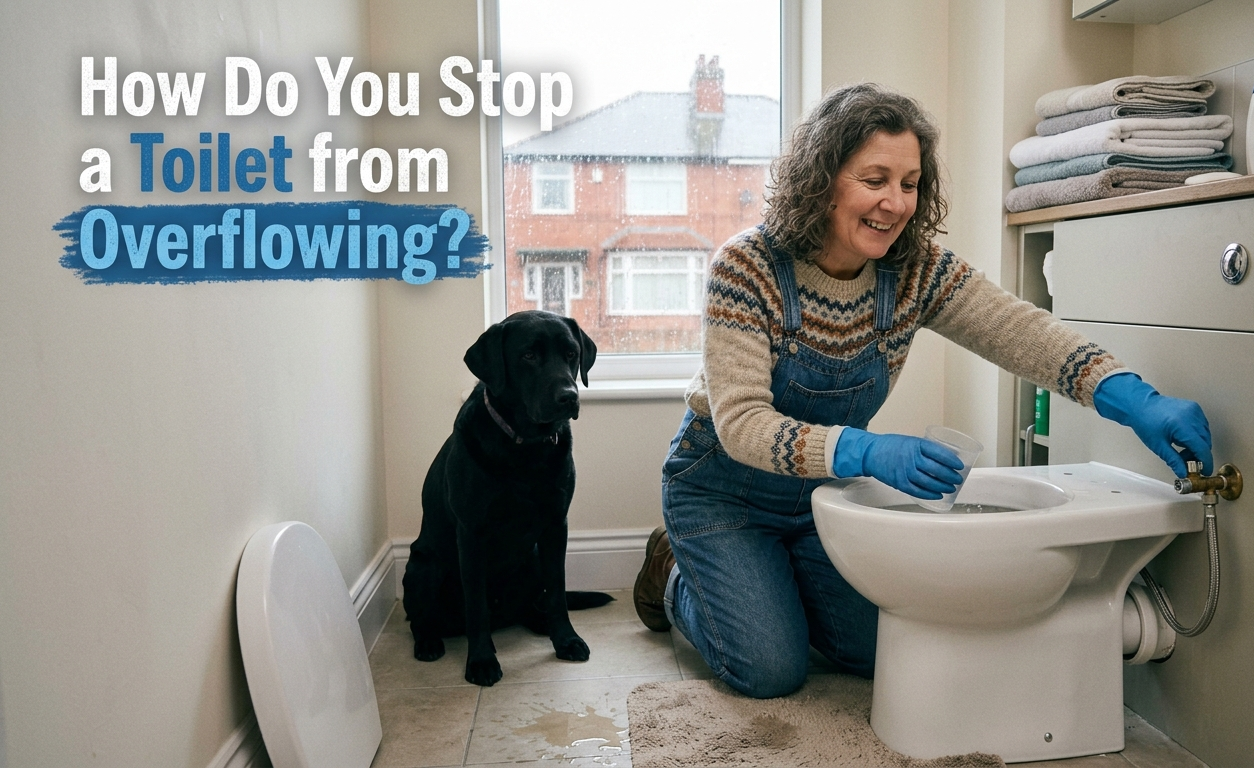
The flush mechanism clicks, the water level starts rising rapidly, and you suddenly realise it is not going to stop. Within seconds, you are facing a highly stressful situation as dirty water threatens to spill over your bathroom floor.
When a toilet begins to rise, taking quick action is your absolute best defense to prevent a major mess. You do not have time to read long plumbing history lessons or browse through complex, unnecessary technical theories.
You need to know exactly how you stop a toilet from overflowing right this second to protect your home. This emergency guide is designed as a quick reference manual, delivering instant instructions to keep your bathroom safe and dry.
 Is your toilet actively overflowing and causing a messy situation right now? Do not panic—call Emergency Plumbing Group 247 on 0800 294 4365 for an immediate, fixed-price emergency engineer!
Emergency Problem 1: The Water is Actively Rising Right Now
You are looking at the bowl, and the water is dangerously close to spilling over the porcelain lip. Every single second counts here, and waiting for the cistern to finish its cycle naturally can worsen the spill.
Your immediate goal is to cut off the water source before it can touch your bath mats or floorboards. Most people stand there frozen, but you can mechanically stop the water flow manually in under fifteen seconds.
The Quick Solution: The 15-Second Manual Shut-Off
Drop to your knees immediately and look directly behind or underneath the toilet cistern near the wall support. You will find a small metal braided hose connected to a chrome valve, known as the isolation valve.
Turn this valve firmly clockwise with your fingers to immediately stop fresh water from entering the toilet. If the valve feels a little stiff, slot a flathead screwdriver into the centre slot and twist it sideways.
If your toilet does not have an visible isolation valve, follow this quick emergency backup plan instead:
- Remove the lid: Lift the heavy ceramic cistern lid off the top and place it carefully out of the way.
- Locate the float: Find the plastic floating ball or cylinder mechanism sitting inside the water tank.
- Lift it gently: Lift the float mechanism upward to signal the system to stop filling the tank.
- Check the flapper: If the rubber seal at the bottom of the tank is stuck open, push it down manually.
Emergency Problem 2: Water Has Spread Across the Bathroom Tiles
The worst has happened, the water has escaped the bowl, and dirty water is spreading across your floor. This situation creates an immediate hygiene risk that needs to be addressed before the moisture settles into the woodwork.
Standing water can quickly seep into your baseboards, grout, and lower flooring if it is left unaddressed for too long. You must contain the physical spread of the liquid while preparing to clear the source of the blockage.
The Quick Solution: Containment and Basic Hygiene Setup
Before you touch anything, you must protect yourself from dirty water by putting on standard household rubber cleaning gloves. Keep children and family pets completely away from the bathroom until the entire area is fully cleaned and dried.
Throw down old, disposable towels or heavy cloths directly at the bathroom doorway to block the path of the spill. Do not use your good decorative towels for this, as they will need a heavy wash or disposal afterward.
Once the boundary is safe, follow this immediate containment checklist to restore safety:
- Absorb the moisture: Use old rags or a dedicated wet-vacuum to soak up the standing water on the tiles.
- Ventilate the space: Open all bathroom windows fully and turn on the extractor fan to keep fresh air moving.
- Sanitize the surface: Use a reliable household disinfectant to thoroughly clean the floor once dry.
Emergency Problem 3: A Stubborn Clog Deep Inside the Waste Pipe
Your water supply is safely turned off, but the porcelain bowl remains completely full of stagnant, messy water. This happens because a foreign object or excessive toilet paper is wedged tightly inside the internal trapway.
Every time someone flushes, the water hits this solid wall and has nowhere to go but up and out. You cannot use the toilet again until this physical blockage is completely dislodged and pushed through the pipe.
The Quick Solution: The Practical Plunger Method
Chemical drain cleaners may not be suitable for toilet blockages and can make some plumbing situations harder to manage. Instead, grab a heavy-duty, dome-shaped toilet plunger that features an extended rubber flange at the bottom.
A flat sink plunger will not work efficiently here because it cannot form an airtight seal inside a toilet bowl. Make sure you maintain a firm grip on the handle to get the maximum force through the pipe.
Execute the clearing process using this reliable, high-pressure plunging technique:
- Check the water level: Ensure the rubber dome is completely submerged in water to create a proper vacuum.
- Angle the tool: Insert the plunger at an angle so the internal dome fills with water rather than air.
- Push smoothly: Press down gently on the first stroke to push the air out without causing a splash.
- Pump firmly: Pull up and push down vigorously for twenty seconds while maintaining a tight, steady seal.
The sudden shifts in pressure will break up the paper clog, causing the stagnant water to drain away naturally.
Did the plunger fail to clear the stubborn blockage inside your waste line? Call Emergency Plumbing Group 247 on 0800 294 4365 right now to get your drains kitted out with professional tools!
Emergency Problem 4: The Cistern Keeps Running Non-Stop
The toilet bowl is clear of blockages, but fresh water is constantly trickling down the back of the porcelain. If you leave this running, the internal overflow system can eventually become overwhelmed, causing a slow spill later.
This issue is rarely a pipe problem; it is caused by misaligned or worn-out components inside the flushing box. The plastic float mechanism is simply failing to register that the tank is already full of water.
The Quick Solution: Checking and Adjusting the Internal Float
Take the cistern lid off again and look closely at the water level compared to the plastic overflow tube. If the water is pouring over the top of the open tube, your float is sitting too high.
Modern toilets have a long plastic adjustment screw next to the float cylinder that controls the automatic fill line. Turn this adjustment screw counter-clockwise with your fingers to safely lower the height of the float mechanism.
If you have an older system with a metal rod and ball, try these safe inspection tips:
- Check the mechanism: Inspect the float mechanism and adjust it according to the manufacturer’s guidance.
- Look for damage: Ensure the float ball is not waterlogged or cracked, which prevents it from rising properly.
- Clear the debris: Check the internal valve seal for any limescale buildup that might prevent a clean closure.
Emergency Problem 5: Multiple Household Drains Bubbling Simultaneously
You have checked your toilet, but water starts bubbling up into the bathtub or shower tray when you flush. This is a clear indicator that the blockage is not localized to your porcelain toilet bowl anymore.
A main external drain or shared waste pipe is completely choked with structural debris or grease outside the house. Every appliance you use will now cause dirty water to back up into the lowest drains of your home.
The Quick Solution: Total Water Blackout and External Inspection
Immediately instruct everyone in your household to stop using any water outlets until an expert arrives. Do not run the washing machine, do not use the dishwasher, and avoid running any bathroom sinks.
Walk outside your property and locate the main drainage inspection chamber or manhole cover in your garden. Carefully lift the cover using a standard flat screwdriver to check if the chamber is full of standing water.
If the outdoor chamber is completely dry, the blockage is located somewhere inside your property’s private internal pipe network. If the external chamber is full to the brim, the issue lies deeper in the main sewer lines.
Choosing the Right Professional Assistance
Dealing with major drainage issues can be a tricky task that can quickly damage your flooring if handled incorrectly. If your plunger cannot clear the line within a few minutes, continuing to push can stress the porcelain joints.
Professional drainage teams carry heavy-duty mechanical plumbing snakes and high-pressure water jetting gear. They can blast through hardened blockages and structural clogs that a standard household tool cannot even scratch.
Furthermore, an expert engineer can insert a waterproof CCTV camera down your lines to check for hidden structural damage. This ensures you find the true root cause of the issue rather than just clearing a temporary symptom.
Before you invite a drainage team into your home, ensure they provide these standard assurances:
- Fully insured operations: Protecting your walls and floors from accidental damage during messy work.
- Qualified professionals: Experienced and vetted plumbing experts who understand domestic drainage systems.
- Fixed upfront pricing: So you do not get handed a shocking bill after the blockage is cleared away.
Do you want a permanent, worry-free solution to your recurring toilet issues? Contact Emergency Plumbing Group 247 on 0800 294 4365 to book a professional drain clearance today!
Conclusion: Act Fast to Protect Your Property
An overflowing toilet is a high-stress emergency, but acting with speed and calm can save you a lot of trouble. Remember to cut the water at the isolation valve first before attempting any DIY clearing methods.
Never ignore a slow-draining toilet bowl, as it is always the final warning sign before a major spill occurs. Taking care of small blockages today keeps your home safe, dry, and structurally sound for the future.
At Emergency Plumbing Group 247, we specialize in resolving stressful drainage problems with absolute speed. Our qualified and insured plumbing professionals are on standby around the clock to rescue your bathroom floors from damage.
We proudly serve residential households across Hertfordshire, Bedfordshire, and North London every single day of the year. We believe in honest service, which is why we never charge hidden diagnostic fees or extra surprise costs.
Our standard call-out fee is strictly fixed at £85 + VAT, giving you total peace of mind during an emergency. Let our experienced local team take care of the mess and restore safety to your home today.
Don’t risk expensive water damage to your property. Call Emergency Plumbing Group 247 right now on 0800 294 4365 or book your emergency plumbing engineer online today!