Why Is My Radiator Not Heating Up? A Plumber’s Guide to Off-Season Prep

1 hour response time

Call-Out fee £85.00 + VAT

1 year guarantee.

Same day service

Why Is My Radiator Not Heating Up

As the weather begins to transition into the warmer months across Hertfordshire and North London, most homeowners follow a familiar routine: they turn their central heating off and look forward to lower energy bills. It’s that time of year when the boiler finally gets a break from the constant demands of winter.

However, as a plumbing team that has spent over a decade fixing heating systems—from the large Victorian terraces in St Albans to the modern apartments in Barnet—we’ve learned a vital secret: The off-season is actually the best time to ask why your radiator isn’t heating up properly.

Most people ignore a lukewarm radiator until the first frost hits in late autumn. By then, every plumber in the country is booked solid, and you’ll find yourself in a long queue for an emergency call-out. In this comprehensive guide, we’ll walk you through why radiators fail and how you can fix them now, ensuring your home is “Winter-Ready” while the sun is still out.

🛠️ Professional Heating Support near you: 

Don’t wait for the cold to return. If your radiators feel cold or inconsistent, our expert engineers in Hertfordshire, Essex, and North London are ready to help.

Call Now EPG247 at: 0800 294 4365

1. The “Top-Cold” Radiator: Understanding Trapped Air

This is the most common issue we encounter during our rounds in Watford and Enfield. You turn on the heating, the bottom of the radiator feels hot, but the top stays stone cold.

The Diagnosis: Trapped Air

Trapped air. As water circulates through your system, air bubbles can get trapped at the highest point of the radiator. This air acts as a physical barrier, preventing hot water from filling the entire panel.

The Signs:

  • Radiator is hot at the bottom, cold at the top.
  • Gurgling or clicking sounds when the heating starts.
  • The boiler pressure is slightly lower than usual.

The Fix: 

You need to “bleed” the radiator. Using a radiator key, slightly open the bleed valve at the top. You’ll hear a distinctive hissing sound (that’s the air escaping). Once a steady stream of water appears, close it immediately.

A Word of Caution: 

If you find yourself bleeding your radiators every few weeks, you likely have a slow leak or a bigger issue with your system’s expansion vessel that needs a professional eye.

2. The Stuck TRV (Thermostatic Radiator Valve)

Have you ever turned that numbered dial on the side of your radiator but felt no change in temperature? This is a classic “Off-Season” problem we see in Cheshunt and Barnet.

The Diagnosis: 

Inside the TRV (the dial) is a small metal pin that controls the flow of water. During the warmer months when the heating is turned off, this pin can sit in the “closed” position for so long that it becomes seized or stuck.

The Symptoms:

  • The radiator is completely cold while others are hot.
  • The dial turns freely, but the heat never kicks in.

The Fix:

You can sometimes remove the plastic head of the TRV and gently tap the valve body or use pliers to wiggle the pin until it pops back up.

Warning: 

Be extremely careful not to pull the pin out entirely, or you will have a high-pressure leak on your hands. If the valve is old and seized solid, it is often safer to have our team replace it with a modern, more reliable version.

📍 Local Expertise: We have engineers stationed throughout Bedfordshire and North London. Whether you’re in Enfield, Luton or the surrounding areas, EPG247  can replace faulty valves and balance your system.

Summer Ready Preparation

3. The “Cold at the Bottom” Mystery: The Sludge Issue

If your radiator is hot at the top but cold or lukewarm at the bottom, air isn’t the problem. You are likely dealing with a buildup of Central Heating Sludge.

The Diagnosis: Magnetite Buildup

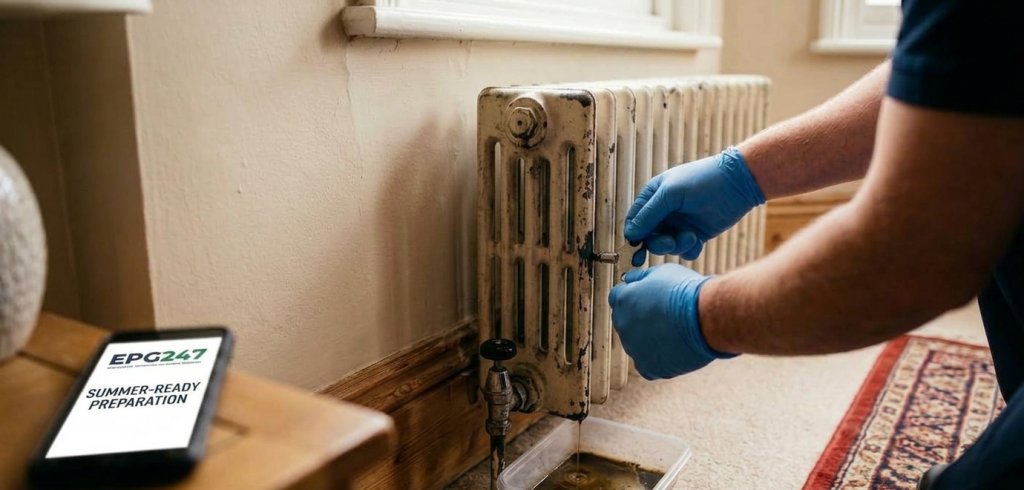
Over several years, the internal iron components of your pipes and radiators corrode. This creates a black, muddy substance called magnetite (sludge). Because this gunk is heavy, it settles at the bottom of your radiators, acting like a thick, cold blanket that prevents hot water from circulating.

Why this is dangerous:

  • Sludge makes your boiler work 20-30% harder, driving up your gas bills.
  • It can travel into your boiler and destroy the expensive pump or heat exchanger.
  • It causes “Kettling” noises (banging sounds) inside your boiler.

The Fix: Power Flushing

This is not a DIY job. A system full of sludge needs a Power Flush. We use a specialized, high-velocity machine and chemicals to flush out all the black debris, restoring your system to nearly new efficiency.

Real-life Case:

We recently performed a Power Flush for a client in Harrow who complained about high energy bills. After cleaning the system, their radiators were piping hot in half the time, and their boiler stopped making those worrying noises.

4. Boiler Pressure and Flow Issues

Sometimes the radiator itself is perfectly fine—the problem lies with the “heart” of the system: your boiler.

The Pressure Gauge: 

Check the front of your boiler. If the needle is below 1 bar (usually in the red zone), the system won’t have enough “push” to reach the radiators at the end of the hallway or on the top floor of your Hertfordshire home.

The Pump Failure: 

The circulation pump is responsible for moving water around the house. If the pump is seized or failing, the hot water stays trapped inside the boiler.

The Symptoms of Low Pressure/Pump Failure:

  • Multiple radiators stay cold or lukewarm.
  • The boiler frequently shuts itself down (Lockout).
  • The pipes directly under the boiler are hot, but the radiators are cold.

📞 Instant Help: Don’t let a small pressure drop turn into a boiler breakdown. If your gauge is in the red, In this case, it’s best to contact a qualified engineer to avoid further damage. Call at 0800 294 4365. We cover Essex, Herts, and North London 24 hours a day.

Why Fix This During the Warmer Months?

It is tempting to ignore a cold radiator once the sun comes out, but fixing it during the off-season has massive benefits:

  • Availability: During the peak winter months, plumbers are often overwhelmed with emergency calls. In the warmer months, we can provide a more thorough, non-rushed service to ensure your system is perfectly optimized.
  • Cost-Savings: Scheduled maintenance is always more budget-friendly than an emergency call-out on a freezing Sunday night in the middle of winter. By booking your repairs during the off-season, you avoid peak-time surcharges and the stress of a sudden breakdown.
  • Efficiency: A clean, balanced system uses less gas. By fixing your radiators now, you’ll start saving money on bills the moment the heating goes back on in the autumn.
  • System Longevity: Removing sludge and fixing valves adds years to your boiler’s lifespan.

Final Thoughts from our Local Experts

At Emergency Plumbing Group 24/7, we believe in “Preventative Maintenance.” Whether you are in St Albans, Cambridge, or Barnet, your heating system is an investment that needs care. Don’t wait for the first frost to discover a problem.

Our Service Areas Include:

  • Hertfordshire (Watford, St Albans, Stevenage)
  • North London (Enfield, Barnet, Tottenham, Harrow)
  • Essex (Harlow, Chelmsford, Colchester)
  • Bedfordshire & Cambridgeshire surrounding districts.

Contact the team today for a transparent, no-obligation quote and get your home ready for the year ahead. Call Us now 0800 294 4365

Frequently Ask Question

How do I fix a radiator that is not heating up?

Start by checking your thermostat settings and ensuring your boiler pressure is between 1.5 and 2.0 bar. If only the top is cold, bleed the radiator. If the bottom is cold, you likely have sludge buildup that requires a professional power flush.

No, always turn off your central heating before bleeding. Bleeding while the pump is running can actually draw more air into the system, potentially damaging your boiler’s internal components.

This is a classic sign of “sludge” (iron oxide) buildup. The heavy debris settles at the bottom, blocking hot water circulation. A professional power flush is the most effective way to clear this and restore efficiency.

Yes. If your boiler pressure drops below 1.0 bar, the system won’t have enough force to push hot water through the pipes, causing radiators to remain lukewarm or cold despite the boiler being on.

If you’ve bled the radiators and checked the pressure but they remain cold, it’s time for a professional. Issues like faulty pumps, seized valves, or internal boiler blockages require Gas Safe registered expertise.