It’s a specific kind of frustration: your boiler is humming away, the heating is on, and most of your house is warm—except for that one stubborn radiator. Whether it’s the unit in the spare bedroom or the one at the end of the hallway in your Hertfordshire home, a single cold radiator is a puzzle that needs solving.
When the rest of the system is working, the problem isn’t with your boiler. Instead, the issue lies within the radiator itself or the specific section of pipework serving it. As we move through the spring and summer months, now is the ideal off-season time to address these cold spots.
Fixing a single cold radiator now ensures your entire home is balanced and efficient long before the winter rush begins.
Dealing with a single cold room?
If you have one radiator that refuses to warm up while the others are scorching, you don’t have to settle for a cold spot. Our engineers across Essex, Hertfordshire, and Cambridgeshire can diagnose the issue and restore balance to your home today.
Call Emergency Plumbing Group 24/7 at: 0800 294 4365
1. The Most Common Culprit: A Stuck TRV Pin
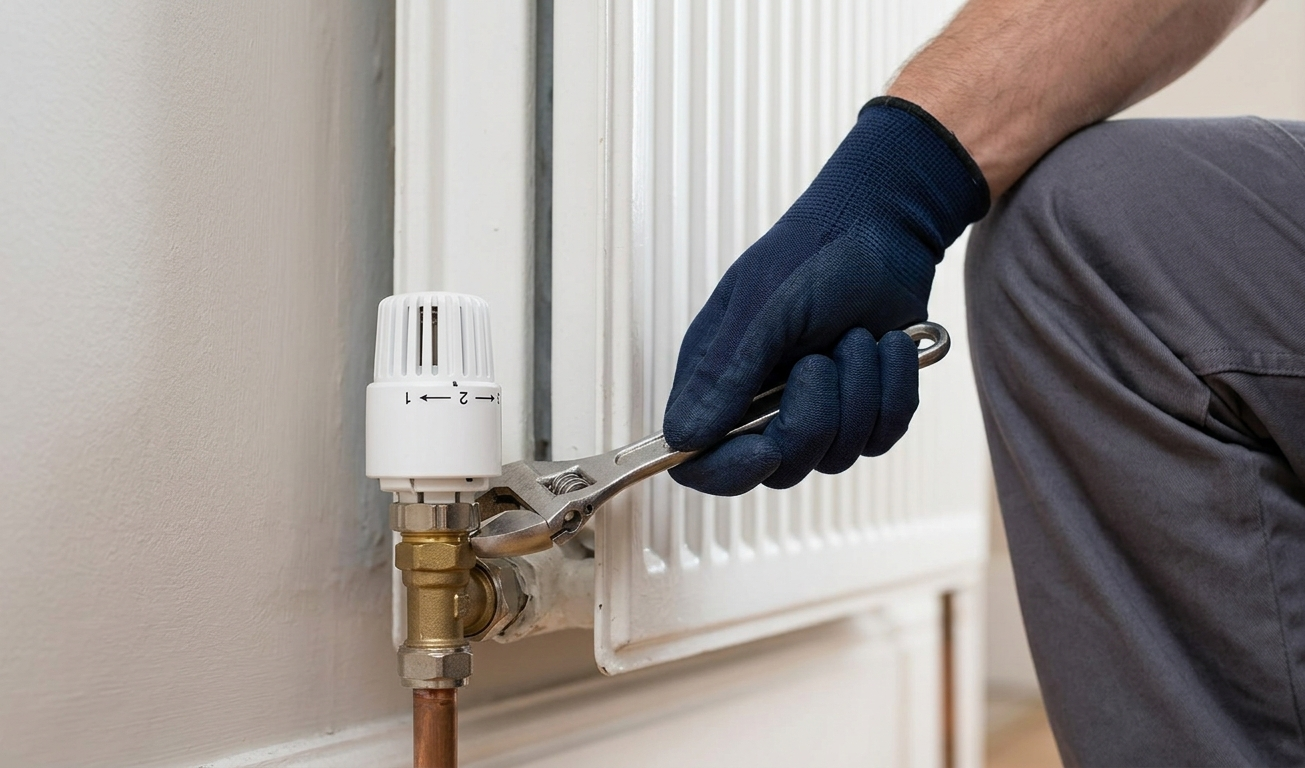
The Thermostatic Radiator Valve (TRV) is the dial you turn to adjust the temperature in each room. Inside this valve is a small metal pin that controls the flow of hot water.
How it happens:
If a radiator has been turned off or set low for a long period—very common as we head into the warmer months—that internal pin can get stuck in the ‘closed’ position.
The Diagnosis:
- The radiator is completely cold, but the pipes leading to it feel warm.
- Turning the dial to the maximum setting doesn’t change the temperature.
The Professional Fix:
We often find this in properties across St Albans and Watford. By carefully removing the TRV head, we can manually release the pin. If the pin is seized or the internal spring has failed, a quick valve replacement is all that’s needed to get the heat flowing again.
2. An Unbalanced System (The “Laziness” of Water)
Water, like most things, follows the path of least resistance. In a central heating system, the hot water will naturally pump into the radiators closest to the boiler first. If the system isn’t “balanced,” the radiator furthest away—often in a loft conversion or a rear extension—won’t receive enough flow to get hot.
Why Balancing Matters:
- Without balancing, the “near” radiators take all the energy.
- The “far” radiators stay lukewarm or cold.
- Your boiler works harder than it needs to, wasting gas.
The Lockshield Adjustment:
Every radiator has a second valve, usually covered by a plastic cap, known as the Lockshield Valve. Balancing involves adjusting these valves across the whole house to ensure the water pressure is distributed evenly.
📍 Local Experts Near You: Balancing a heating system is a precise task. If you close one valve too much, you could inadvertently shut off heat to another room. EPG247 serves Chelmsford, Cambridge, and beyond, ensuring every radiator in your home performs perfectly.
3. Isolated Air Locks in the Pipework
Sometimes, bleeding the radiator isn’t enough to solve the problem. If there is a large pocket of air trapped in the specific branch of pipework leading to that one radiator, it creates a blockage that the pump cannot overcome.
When this happens:
This is frequently seen in homes with unusual pipe layouts or where a new radiator has been added to an existing circuit.
What we look for:
- Gurgling or “banging” sounds coming from the walls or floorboards near that radiator.
- The radiator remains cold even after bleeding it until water appears.
The Solution:
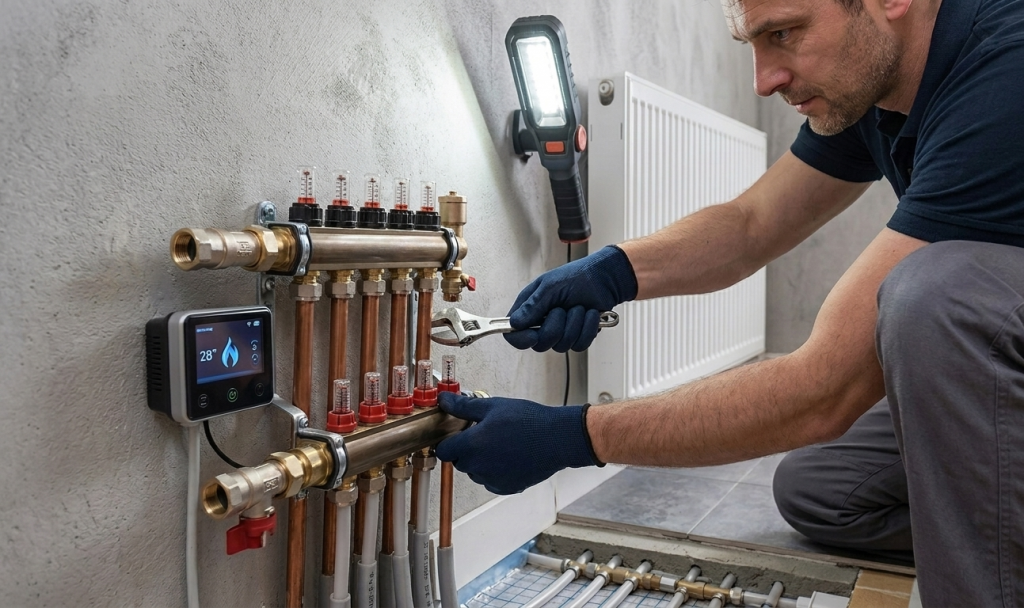
This usually requires a professional “flush” or a specialized technique to force the air lock out of that specific loop. It’s a common issue we resolve for clients in Cambridgeshire townhouses where the pipework often has multiple bends.
4. Localized Sludge Build-up
While system-wide sludge is a major issue, it can sometimes settle heavily in just one radiator. This is common if that radiator is at the lowest point of the system or if it has been turned off for several years.
The Signs of a Blocked Radiator:
- The top of the radiator is warm, but the bottom half is stone cold.
- The radiator feels heavy or makes a dull “thud” when tapped at the bottom.
The Risk:
Sludge (magnetite) is essentially rusted metal from inside your pipes. If left in one radiator, it will eventually travel back to your boiler, potentially damaging the pump or heat exchanger.
⚠️ Don’t Ignore the Mud: If the water coming out of your radiator during bleeding is black or murky, your system is crying out for a clean. We offer Power Flushing across Herts, Essex, and North London to keep your system debris-free.
Call Now: 0800 294 4365
5. A Homeowner’s Checklist: 5 Steps to Try First
Before you call in the pros to your Essex or Hertfordshire home, run through this quick checklist to see if you can identify the root cause:
- Step 1: Check the TRV. Turn it to the highest number and wait 15 minutes.
- 2: Check the Lockshield Valve. Remove the plastic cap on the other side of the radiator. Use a small spanner to ensure it is turned fully anti-clockwise (open).
- Step 3: Bleed the Unit. Even if you’ve done it before, try again. Air can sometimes shift after the heating has been running for a while.
- Step 4: Check Neighboring Radiators. Are the radiators on the same floor working? If they are all cold, the problem might be a larger pipework issue.
- Step 5: Verify Boiler Pressure. Ensure the gauge is sitting between 1.5 and 2.0 bar. Low pressure affects the furthest radiators first.
Why Resolve This During the Warmer Months?
It is tempting to ignore a cold radiator in an unused room once the weather improves. However, there are significant benefits to fixing it during the off-season:
- Preventative Maintenance: A stuck valve or a small air lock can lead to internal corrosion over the summer if left unaddressed.
- Energy Efficiency: When one radiator doesn’t work, you often turn the rest of the heating up higher to compensate. Fixing the “cold spot” allows you to run your heating at a lower, more efficient setting.
- Faster Service: During the spring and summer, our engineers have more flexibility in their schedules, meaning we can get to your Cambridgeshire or Essex property at a time that suits you perfectly.
- Peace of Mind: You won’t have the stress of a cold bedroom when the first cold snap hits in the autumn.
Final Thoughts from the Emergency Plumbing Group 24/7 Team
A home with “partial heating” is never truly comfortable. Whether it’s a seized TRV pin in St Albans, a balancing issue in Cambridge, or an air lock in Colchester, we have the local expertise to ensure your central heating system is working as a single, efficient unit.
We are proud to serve:
- Hertfordshire: St Albans, Watford, Hertford, Stevenage.
- Essex: Chelmsford, Colchester, Harlow, Braintree.
- Cambridgeshire: Cambridge, Ely, Huntingdon.
- North London & Bedfordshire surrounding areas.
Don’t settle for a cold room. Contact Carl and the team at Emergency Plumbing Group 24/7 today.
Why is only one radiator cold in my whole house?
This is typically a localized issue such as a stuck TRV pin on that specific radiator, a closed lockshield valve, or an air lock. It could also mean the system is “out of balance.
What is radiator balancing?
Balancing involves adjusting the valves on all radiators so that hot water is distributed evenly. Without it, radiators closest to the boiler take all the heat, leaving the furthest radiators cold or lukewarm.
How do I open a lockshield valve?
Remove the plastic cap on the opposite side of the TRV dial. Use a small spanner to turn the metal spindle anti-clockwise. If it was turned off, opening it would allow hot water to enter the radiator.
Can a single radiator be blocked by sludge?
Yes. Sludge often settles in the radiator furthest from the pump or at the lowest point of the system. This localized blockage prevents that specific unit from heating up even if the rest of the house is warm.
Does a cold radiator affect my heating bills?
Yes. An unbalanced or blocked radiator forces your boiler to run longer and harder to compensate for the “cold spot,” leading to higher gas bills and unnecessary wear and tear on your boiler’s components.