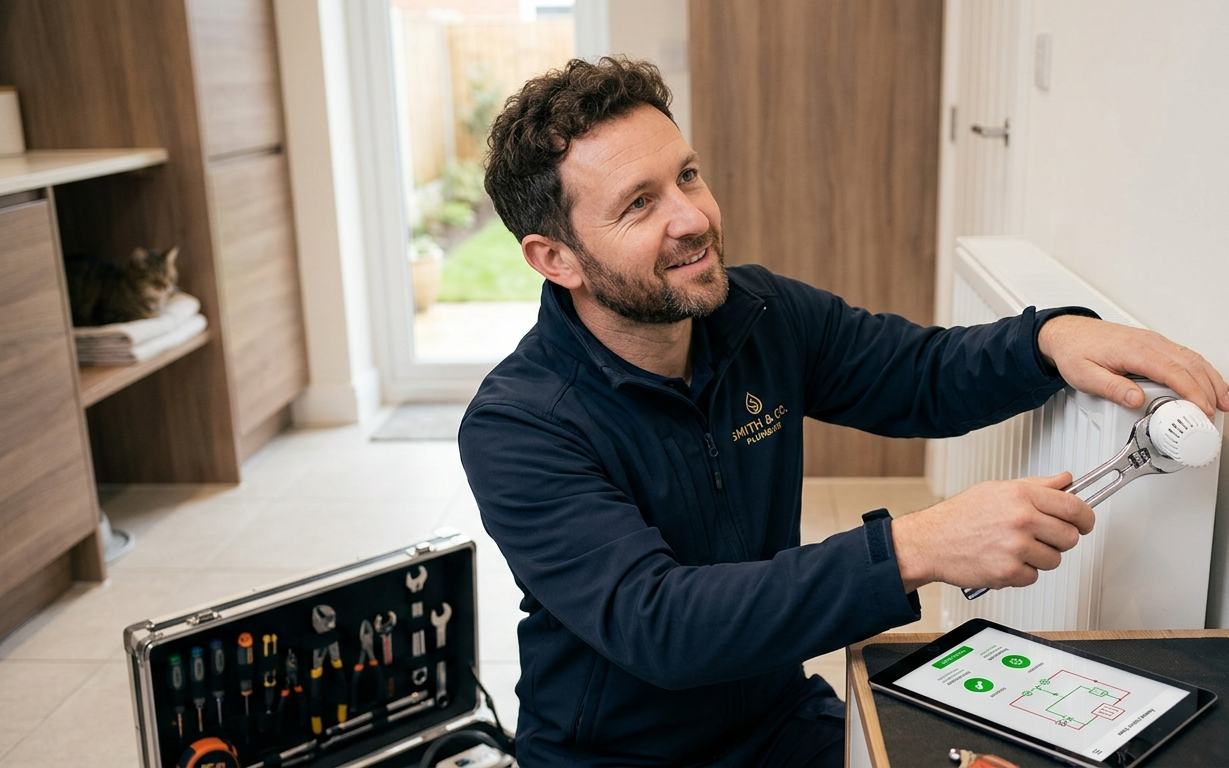
It is one of the most frustrating moments for any homeowner: you’ve grabbed the radiator key, protected the carpet with a rag, and successfully bled the air out of your system. You expected instant warmth, but thirty minutes later, the radiator is still as cold as a rainy night in North London.
As we transition into the warmer months and finally turn our central heating off, many people in Cambridgeshire and Essex realize that their simple DIY fixes haven’t worked. When bleeding a radiator doesn’t solve the problem, it means the issue isn’t trapped air—it’s something deeper within the system’s mechanics.
At Emergency Plumbing Group 24/7, we believe the off-season is the smartest time to perform a “Deep Dive” into your heating system. Addressing these stubborn cold spots now prevents emergency breakdowns when the temperature inevitably drops again.
Bleeding didn’t work?
If your radiators are still cold after bleeding, there is a mechanical or chemical blockage that needs expert attention. Our local teams in Essex, Hertfordshire, and North London can diagnose the root cause today.Call Emergency Plumbing Group 24/7 at: 0800 294 4365
- The “Lockshield” Valve Bottleneck
Sometimes the solution isn’t about what’s inside the radiator, but how the water is being allowed to enter. On the opposite side of your Thermostatic Radiator Valve (TRV), there is another valve covered by a plastic cap. This is the Lockshield valve.
During my recent rounds across Cambridge and Huntingdon, I frequently found that these valves had been accidentally bumped or were never balanced correctly when the system was first installed.
- What it does: It controls the “balance” of the system, ensuring the radiator closest to the boiler doesn’t hog all the hot water, leaving the furthest rooms cold.
- The Problem: If this valve is closed or too restricted, no amount of bleeding will get that radiator hot.
- How to check: Remove the plastic cap. Use pliers or a small spanner to see if it’s turned all the way to the right (closed). Try opening it by turning it to the left and see if heat starts to flow.
- The Stuck TRV Pin: A Common “Off-Season” Issue
The numbered dial on the side of your radiator (the TRV) is prone to seizing, especially when the heating hasn’t been used for a while.
The Diagnosis: Seized Components
Just last week, I visited a townhouse in St Albans where one bedroom remained freezing. The owner had bled the radiator multiple times. Upon inspection, the internal pin of the TRV was stuck in the ‘shut’ position.
The Professional Fix: Releasing the Valve
We remove the plastic head and gently manipulate the pin until it pops back up. If the pin is seized due to limescale—common in Hertfordshire’s hard water areas—the valve will need a professional replacement to prevent future failures.
3. The Failing Central Heating Pump
If you’ve bled every radiator in your Bedfordshire or Cambridgeshire home and multiple units are still cold, the issue might be “The Heart”—your central heating pump.
The Symptoms of Pump Failure
The boiler appears to be running, but the heat isn’t circulating. You might hear a humming or grinding noise from the boiler cupboard.
The Touch Test:
If the pump feels incredibly hot to the touch but the pipes leading away from it are cold, the pump has likely seized or the internal capacitor has failed.
Why it fails:
Pumps can get blocked with debris (sludge) or simply wear out after years of pushing water through the system.
Local Expertise: Don’t let a faulty pump lead to a full boiler lockout. We serve Harrow, Barnet, and Enfield 24/7. (I will add contact button)
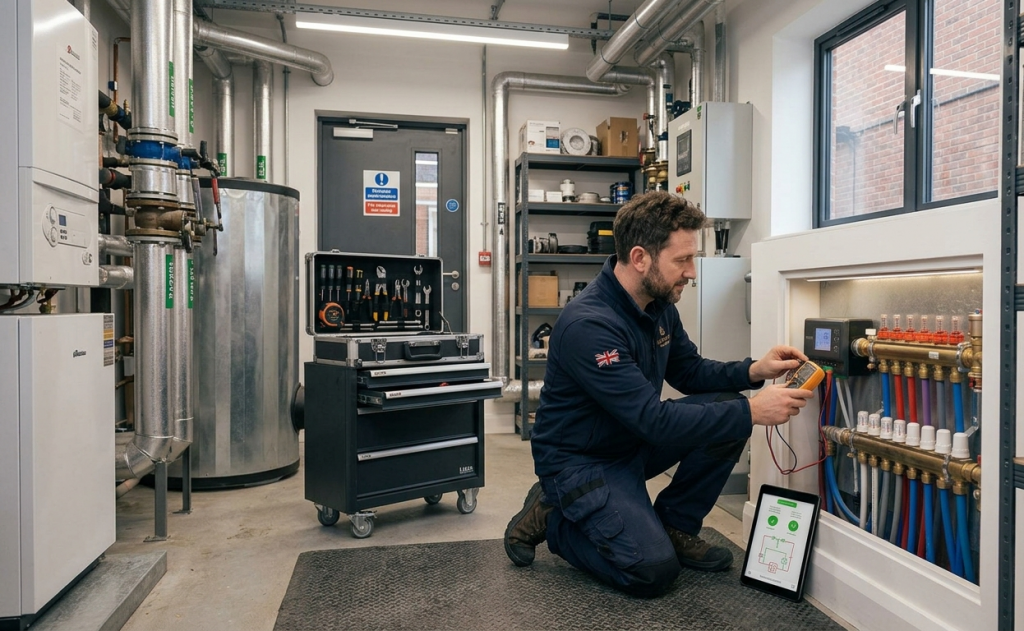
4. Boiler Pressure: The Silent Killer
Every time you bleed a radiator, you are letting air and a small amount of water out of the system. This naturally drops the overall pressure.
- The Cycle of Failure: You bleed the radiator, the air comes out, but the system pressure drops below 1.0 bar. The boiler’s safety mechanism then kicks in and stops sending hot water to the radiators altogether.
- What to do: Always check your boiler’s pressure gauge after bleeding. It should be between 1.5 and 2.0 bar.
- Warning: If you are constantly topping up your pressure, you likely have a slow leak under your floorboards that requires urgent leak detection.
5. Diverter Valve Issues (Combi Boilers)
If you have a Combi boiler and your hot water in the taps is working fine, but the radiators stay cold even after bleeding, the Diverter Valve is the prime suspect.
- How it works: This valve acts like a railway switch, sending hot water either to your taps or to your radiators.
- The Failure: Sludge buildup often causes this valve to get “stuck” in the hot water position. This means you can have a boiling hot shower, but your bedroom radiators will stay ice cold.
6. Why “Waiting Until Winter” is a Mistake
I know the sun is starting to peek out, and you might think, “I’ll just deal with that cold radiator later.” Here is why that’s a bad idea:
- Corrosion Doesn’t Sleep: If there is sludge or air in your system, it is eating away at your pipes and radiators 24/7, even when the heating is off.
- Cheaper Rates & Faster Service: Many plumbing issues are cheaper and faster to fix in the spring and summer when we aren’t battling emergency snow-ins and peak demand.
- Efficiency: A clean, balanced system uses significantly less gas. Fixing that radiator now means lower energy bills the moment the heating goes back on in the autumn.
Final Thoughts from the Emergency Plumbing Group 24/7 Team
Whether you are in a cottage in Saffron Walden, a townhouse in Cambridge, or a flat in North London, your heating system deserves professional care. If bleeding the radiators hasn’t worked, there is a technical reason—and we have the tools to find it.
We offer specialized services across:
- Hertfordshire (St Albans, Watford, Hertford)
- Essex (Chelmsford, Colchester, Harlow)
- Bedfordshire (Luton, Bedford)
- North London (Barnet, Enfield, Harrow)
Ready to get your home “Winter-Ready” today? Don’t wait for the rush. Call the team today for a transparent, no-obligation quote.
- Cambridgeshire (Cambridge, Ely, Peterborough)
Call: 0800 294 4365
frequently asked questions
Why is my radiator still cold after bleeding it?
If bleeding doesn’t work, the issue is likely a stuck Thermostatic Radiator Valve (TRV) pin, an air lock deep in the pipework, or a heavy accumulation of sludge at the bottom of the radiator preventing water flow.
How do I fix a stuck radiator valve pin?
Remove the plastic head of the TRV to reveal the small metal pin. Gently tap the side of the valve or use pliers to wiggle the pin up and down until it moves freely. If it remains seized, the valve needs replacement.
What is an air lock in a central heating system?
An air lock is a large bubble of air trapped in a pipe that acts as a physical barrier. It prevents hot water from circulating to the radiator. Professional techniques are often needed to force these locks out.
Why is the water black when I bleed my radiator?
Black water indicates “magnetite” or sludge buildup. This is internal rust from pipes and radiators. While a small amount is common, very dark water suggests your system needs a chemical clean or a power flush to prevent damage.
Can a faulty pump cause cold radiators after bleeding?
Yes. If the central heating pump is failing or seized, it won’t have the power to push water through the circuit, even if all air has been removed. You may hear a humming or grinding noise from the pump.